Why Visit Batu Caves?
Nestled in Malaysia’s Gombak district, just about 13 kilometers to the north of Kuala Lumpur, lies Batu Caves – a prominent tourist destination celebrated for its fusion of natural splendor, rich culture, and spiritual prominence.
This ancient limestone hill features numerous caves and temples, making it a significant site of worship and an intriguing place to explore.
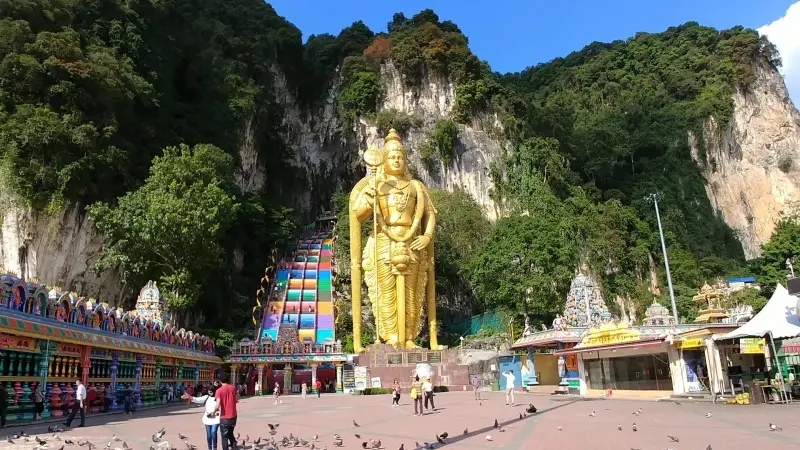
As one of the most revered Hindu shrines outside India, Batu Caves is dedicated to Lord Murugan, the Hindu god of war. The site is graced by a towering 42.7 meters statue of Lord Murugan, which is the tallest of its kind in the world.
The awe-inspiring figure greets visitors at the entrance, symbolizing the site’s spiritual significance. It is also the center of the vibrant Thaipusam festival in Malaysia, drawing millions of spectators and devotees every year.
Moreover, Batu Caves is a haven for nature enthusiasts and adventurers, featuring a limestone formation that dates back approximately 400 million years. This ancient natural feature is home to diverse fauna, including an animated colony of macaque monkeys that add a lively touch to the site.
Location and Route
Located in the outskirts of Kuala Lumpur, Batu Caves is easily accessible and just a short trip away from the city center. A variety of transportation options make the journey to Batu Caves relatively easy.
If you’re based in Kuala Lumpur City Center, Batu Caves is approximately a 20-minute drive away. Options include taxis, Grab, or even renting a car for a more personal experience.
Public transport is also readily available; the KTM Komuter train service connects the KL Sentral Station with the Batu Caves Station, which is just a short stroll away from the cave complex.
Travelers from Kuala Lumpur International Airport (KLIA) can expect about an hour’s drive to Batu Caves. The site can be reached directly via a taxi or Grab, or alternatively through a combination of the KLIA Ekspres and KTM Komuter train services via KL Sentral.
When to Visit
Open year-round, Batu Caves welcomes visitors from 6:00 AM to 9:00 PM. Early morning visits are recommended for cooler temperatures and a less crowded experience.
Batu Caves is most vibrant during Thaipusam, usually falling in late January or early February. This festival turns the temple complex into a colorful canvas of rituals, processions, and performances. However, it’s worth noting that the site can be exceptionally busy during this period.
What to See
1. Lord Murugan Statue and the 272 Steps
The impressive golden statue of Lord Murugan is hard to miss on arrival. The statue stands guard by the iconic 272-step staircase that leads to the entrance of the main cave, also known as the Temple Cave or Cathedral Cave. A climb up these steps offers rewarding views and a fascinating temple complex awaiting inside the cave.
2. Temple Cave
The Temple Cave is the largest in the Batu Caves complex and is a spiritual sanctuary housing several Hindu shrines under its 100-meter high vaulted ceiling.
A visit here offers the opportunity to admire various murals and statues representing Hindu mythology, creating a tranquil and spiritual atmosphere.
3. Dark Cave
The Dark Cave presents an intriguing exploration for nature enthusiasts and adventurers. Guided tours provide insights into the cave’s ecology, its unique inhabitants, and conservation efforts. The cave is home to a diverse range of animals, including bats and spiders, and features the ‘Gergasi’, a stalagmite that grows one inch every 100 years.
4. Art Gallery Cave and Museum Cave
Situated at the foot of the hill, these caves showcase a collection of Hindu statues and paintings that narrate stories from Hindu mythology, providing cultural and religious enlightenment for visitors.
5. Rama Cave and Hanuman Statue
The Rama Cave holds significance with its remarkable statue of Hanuman, the monkey-like deity and devotee of Lord Rama in Hindu mythology. This cave is the venue for various religious ceremonies and houses an array of captivating Hindu statues and scenes. In summary, a trip to Batu Caves promises a remarkable blend of spiritual reverence, natural wonder, and cultural exploration. Whether you’re on a spiritual quest or a journey of discovery, Batu Caves stands as a fascinating exploration, offering a unique opportunity to delve deep into one of Malaysia’s most iconic landmarks.
 Daily Trips